I was out to dinner with some friends not too long ago, and someone posed the question, “If you could only hunt one upland bird for the rest of your life, what would it be?”
Lifelong wing shooters, the group equated the question to being asked to choose a favorite child. One said that they couldn’t do without the flush of bobwhite quail. Another noted that blue grouse would be their bird of choice. But after pondering the question and a few more sips of scotch, the truth came out – everyone at the table amended their answers to something along the lines of, “I would still have to be able to chase pheasants,” or “As long as I could still shoot a rooster now and again.” My answer had the same sort of caveat, and for good reason; few spectacles on this creation equal the sight of an early morning frost and a giant rooster bursting out from the underbrush, cackling to the world to announce his grievances, showing all those magical colors in the cool November air.
Not too long after that dinner with my hunting buddies, I found myself in the milo fields of Kansas, confirming my conviction.
There’s nothing quite like hunting pheasants. The rumor was that the bird numbers in Kansas for 2023 were unlike anything seen before, at least not in my lifetime. Unfortunately, I’m too skeptical to get overly excited months in advance when people are spouting off numbers and statistics about how many birds made it through the winter or how well the chicks did during the wet spring. I’ve been on too many hunts where the guide told us the bird numbers were outstanding, only to walk mile after mile without pulling the trigger and hear that same guide say, “Yeah, it’s been tough. The bird numbers are down.”
When it comes to hunting, I believe in the “eye test.” A mantra of “I’ll believe it when I see it” might not be the best attitude to have, but when it comes to my hunting, I can only believe what I see and the eye test has yet to steer me wrong. So, as I loaded up my shotgun for my first hunt, I intended to wait and see what the eye test told me. Were there as many birds as the rumors led one to believe? Or were the outfitters just doing a great job of selling a lie?
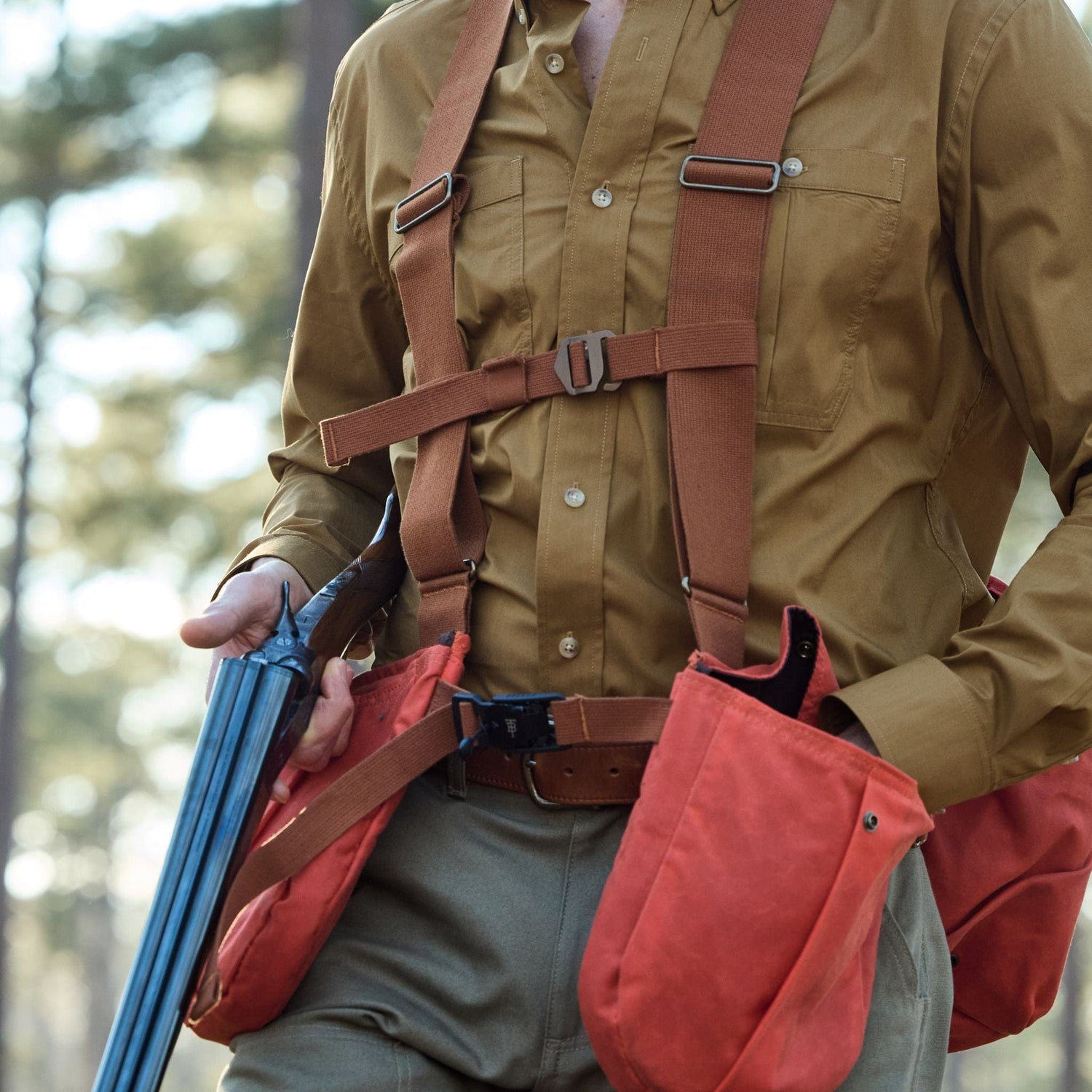
We made an excellent firing squad with eight guns on my right and seven on my left. Our guide, Logan, was giving his commands to the dogs, and within about two minutes, the first rooster flushed into a hail of shot. The eruption of shotguns scared three more birds that would have otherwise been perfectly content to hold right where they were and let us walk over them, a trick that has kept so many roosters from meeting their demise. Two more birds crashed into the brush. Logan’s white and liver-spotted German shorthair Lucy, found one, while his small-in-stature but giant-in-heart cocker spaniel found the other. Pushing forward, it sounded like a day at the trap range. It was remarkable. The eye test confirmed the rumors were true.
We came to a strip of disced corn and stopped to realign ourselves. A rooster sprang out and flew across the line of fire, flying with the wind, gaining distance, and humbling everyone who hadn’t learned the lesson to “try and miss in front of the bird.” I drew my bead on the body, then brought it well in front of his beak. Once I was confident my #5s would be in front of his flight path, I pulled the trigger. Wings and tail feathers came crashing down. Everyone cheered at the successful shot. I wanted to put my shotgun away, knowing that ninety-nine percent of that shot was blind luck, and ending on a high note like that is a preferred way to cap off your morning. Alas, the cackling calls from the pheasants ahead of us sang out, and there were still birds yet to be bagged.
Nothing in the world compares to watching a good gun dog work, and this was watching good gun dogs at their finest. I had to rest my gun on my shoulder and admire the three German shorthairs, the two Drahthaars, and the little cocker spaniel, all being the best gun dogs in the world that morning. The points were true. The birds were flushed. It was poetry in motion.
Once our group arrived at the end of the field, we emptied our game bags, a few roosters shy of our limit. As Logan planned another quick drive, we congratulated each other on shots made and ribbed one another on shots we should have. Then, we were on a drive through some rather impressive whitetail deer country. Trees provided shelter, with thick brush around the perimeter. It wasn’t long before the birds started to kick up. Within a few minutes, we had our limit.
The smiles and laughter continued throughout the day. We plucked the coveted tail feathers from the roosters and sized them up like the trophies they are. Back at the lodge, we shot pool and played cards, betting on who would get to shoot on the edges or who would get to hunt behind which dog. Anticipation for the next morning was electric.
I didn’t think it was possible to outdo the spectacle from just 24 hours prior, but my ever-faithful eye test proved me wrong the next day. It quickly became bedlam. Pheasants erupted from the ground. The dogs were even more in tune, seeming to tirelessly rotate between pointing live birds and retrieving dead one. As the shooting appeared to be coming from every gun in the field, I stopped and looked over to Logan, who was smiling ear to ear. Then I glanced to my right; my friend Justin was admiring a bird he had just shot. It was like hanging a live painting on the walls of my memory.
Those few days in Kansas proved something to me – the eye test is still the best way to know what to believe and what to take with a grain of salt. My eye test affirmed what my buddies and I discussed that night at dinner: ring-neck pheasants are birds that the upland game hunter can’t go without.
As I looked over those roosters, admiring the dance of reds, greens, and purples, I knew why we drove fourteen hours to Eastern Kansas and why everyone dresses well and carries themselves with a sense of decorum when they step out into the field: pheasants are special. They provide excellent wing shooting. They bring the best of friends together. They give the world’s best gun dogs a chance to showcase their abilities. They reward good shooting with a beautifully colored prize.
Indeed, if I can have only one bird, I will have pheasants.
About the Author
Ryan Barnes is a passionate outdoorsman, who loves the arts of wingshooting and angling and the joy of turning that art into words. Since he was a boy he’s looked for any excuse to find himself outdoors with friends and family. Now, he looks for any excuse to find the finer details in those outdoor escapes and capture them in the written word.